Schedules & Transitions
Making Transitions Between Homes Easier
Rituals, packing routines, transition objects, and a plan for the re-entry mood that follows exchange day.
Key takeaway
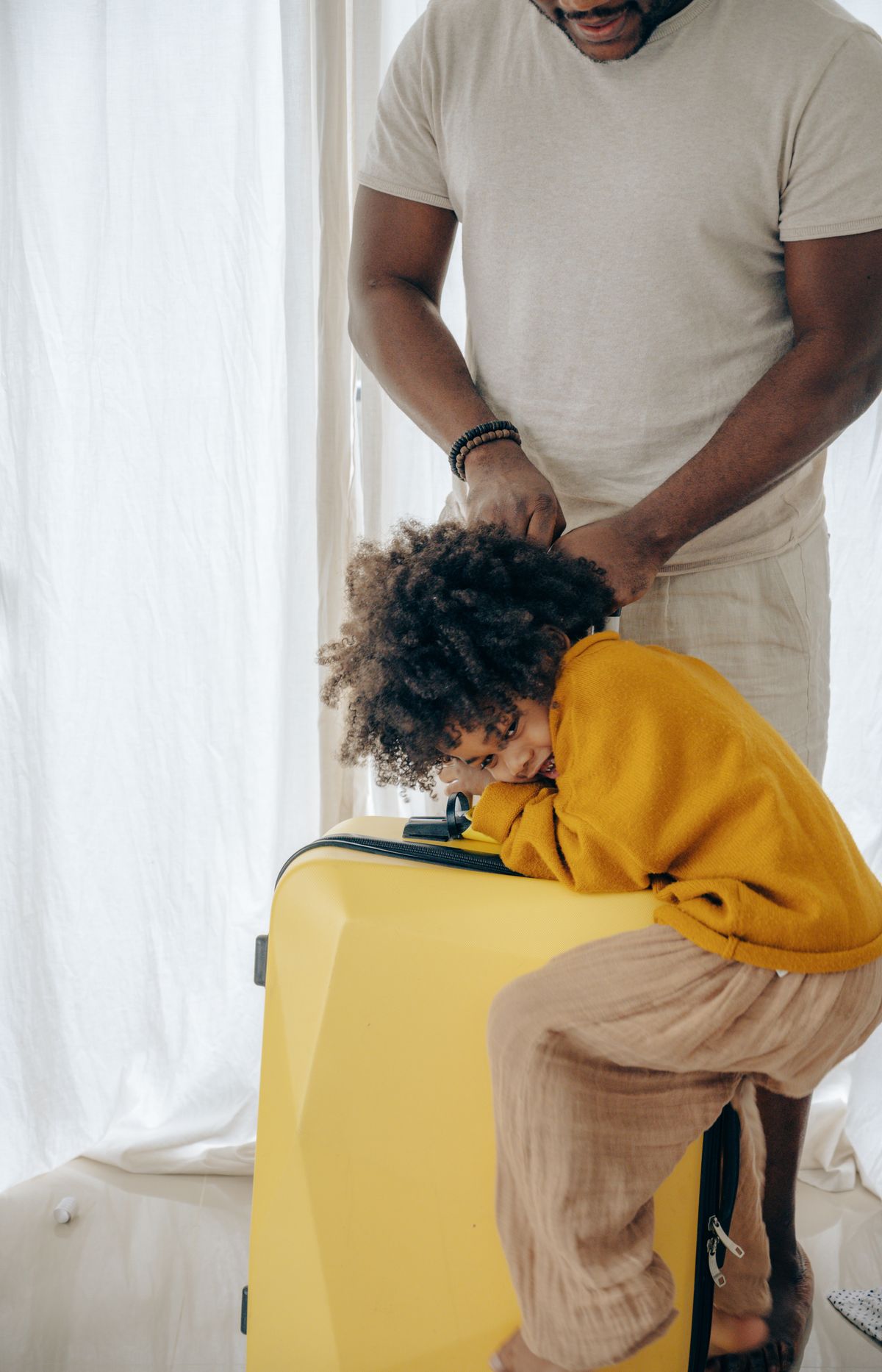
Transitions are the pressure points of a two-home life, and they get easier when adults make them predictable: a consistent exchange ritual, basics duplicated in both houses so the child packs light, and a calm buffer hour after arrival. A grumpy or withdrawn child after an exchange is usually switching gears, and it signals a needed decompression rather than a problem at the other house.
Based on published expert research. This article has not been reviewed by an attorney and is not legal advice.
Why exchange day is the hardest day
Children in two homes often do fine all week and fall apart on Sunday night. Divorce coach Christina McGhee, in Parenting Apart, explains why: every exchange makes the family change visible again. Saying hello to one parent means saying goodbye to the other, and a child does both in the space of a driveway handoff.
There is also plain gear-switching. Each house has its own sounds, smells, rules, and rhythms, and moving between them takes real mental effort, the same effort you feel on the first morning back from a trip. Add a duffel bag, a homework folder, and two parents managing their own feelings at the curb, and it is no wonder exchanges wobble. The encouraging news from McGhee’s work with thousands of families is that transitions respond quickly to structure. Predictability is the whole trick.
Build a ritual around the exchange
Children relax when they know exactly what will happen. Aim for the same day, the same time, and the same place every cycle, because a Sunday exchange that floats between four and seven keeps a child in suspense all afternoon. Then wrap the handoff itself in a small ritual: the same goodbye hug and phrase, waving until the car turns the corner, then a familiar first step at the new house, like the dog’s leash and a walk around the block.
The adult tone at the handoff matters more than any logistics. McGhee is emphatic that exchanges are the wrong venue for adult business. A dispute about the dentist bill, raised on the doorstep, lands directly on the child standing between you. Keep the handoff short, warm, and boring, and move real conversations to email or a co-parenting app.
- Give a countdown before leaving one home: an hour out, then ten minutes out.
- Let the departing parent send the child off cheerfully, since guilt-tinged goodbyes teach children that leaving one parent hurts the other.
- Save questions and paperwork for later; hello belongs to the child.
Many families also find school-based exchanges gentler: one parent drops off in the morning, the other picks up after school, and the school day itself becomes the buffer.
Pack light by duplicating the basics
Isolina Ricci’s two-homes principle from Mom’s House, Dad’s House has a very practical edge here: a child who hauls their whole life back and forth in a duffel bag feels like a traveler, and travelers are not at home. Wherever budget allows, duplicate the basics so both houses are fully livable: toothbrush, pajamas, underwear, seasonal jacket, chargers, and a stock of the comfort foods your child actually eats.
That shrinks the bag down to what genuinely cannot be doubled: the homework folder, the library book, cleats, the beloved stuffed animal. Post a short checklist by the door and walk it with your kindergartner while packing her backpack the night before, so exchange morning is calm instead of frantic. Older kids can own the list themselves, with a parent doing a quick final sweep for the retainer and the math worksheet.
Transition objects deserve special respect. A small comfort item that travels everywhere, a photo of each parent tucked in the backpack, or a pillowcase that goes back and forth gives young children a thread of continuity between houses. Both homes should welcome these objects without commentary, including the photo of the other parent on the nightstand.
In Parenting Apart, Christina McGhee reminds parents that the two-home arrangement was an adult decision, so smoothing the seams between homes is adult work, and a child should never be the one managing the logistics or the emotional weather of an exchange.
Expect the re-entry mood
Many children arrive grumpy, weepy, silent, or wired, and many parents quietly conclude something bad must be happening at the other house. McGhee urges caution with that leap. The re-entry mood is usually the sound of a child downshifting between worlds, and children often save their hardest feelings for the parent they feel safest with. Treat the first hour as a decompression zone: food ready, expectations low, and a familiar routine instead of an itinerary.
A few re-entry habits help. Skip the interrogation, since a cheerful grilling about the weekend makes a child feel like a courier between rival camps; a simple statement that you are glad they are home, followed by space, works better. Some kids want to reconnect side by side, folding laundry or shooting baskets, rather than face to face. Keep the first evening back unscheduled whenever you can, and let bedtime land at the normal hour.
When transitions stay hard
Give a new routine several cycles before judging it, since most children settle noticeably within a month or two of consistent rituals. If distress stays intense past that, look for patterns with adult eyes. Trouble concentrated at the moment of handoff often points to tension between the parents, and moving exchanges to school or a neutral spot can help. Trouble spread across the whole schedule may mean the rhythm itself, such as too many midweek moves for this particular child, needs revisiting between the adults.
Through it all, hold on to Ricci’s standard: a child with two real homes is not being shuttled between parents; she is moving between two places where she fully belongs. Every calm exchange, packed checklist, and quiet first hour teaches her that both doors open easily, and that she is safe on either side.
What this means for your family
Pick your family’s next exchange day and change just three things: pack the bag the night before with your child helping from a posted checklist, keep the handoff short and warm with business saved for later, and plan a quiet, familiar first hour at home with food ready. Repeat it every exchange until it becomes the rhythm your child can lean on without thinking.
The experts behind this article
References
- 1.McGhee, C. (2010). Parenting Apart: How Separated and Divorced Parents Can Raise Happy and Secure Kids. Berkley Books.
- 2.Ricci, I. (1997). Mom’s House, Dad’s House: Making Two Homes for Your Child. Fireside / Simon & Schuster.
- 3.Ricci, I. (2006). Mom’s House, Dad’s House for Kids: Feeling at Home in One Home or Two. Fireside / Simon & Schuster.
More on schedules & transitions
Schedules & Transitions
Choosing a Parenting Time Schedule That Fits Your Child
Alternating weeks, 2-2-3, 2-2-5-5, extended weekends: each pattern trades off exchange frequency against time apart. Research on child development helps you match the pattern to your child’s age and your real logistics.

Schedules & Transitions
The Infant Overnight Debate, Honestly Explained
Some professionals say no overnights before age three; others say equal time from birth, and the researchers themselves genuinely disagree. Here is what Warshak’s 110-expert consensus report, Emery’s attachment research, and the Pruett, McIntosh, Kelly middle position actually say, and how to draft a schedule inside the ground they share.
Schedules & Transitions
Age-by-Age Parenting Schedules: What the Research Actually Supports
The custody calendar grids you find online rarely say where their numbers came from. Joan Kelly and Michael Lamb’s developmental benchmarks, plus Marsha Kline Pruett’s and Kyle Pruett’s research on early overnights and father involvement, give every age band a research-backed starting point.